Memento mori: Meaning, Origin, and Christian Interpretation
Zwei Worte auf dem Ring eines Kardinals: Was Memento mori bedeutet, woher der Ruf stammt, wie die Kirche ihn am Aschermittwoch spricht und warum er zur Umkehr ruft.
What does “Memento mori” mean? The Latin phrase literally means “Remember that you will die” and, since ancient times, has served as a reminder that every human life is finite. For the traditional Catholic faith, however, this idea is not a cause for despair, but rather a sober invitation to live a conscious, God-pleasing life.
In this article, you’ll learn where the saying comes from, what role it plays in the Catholic liturgy, and why it remains a popular motif in art and an object of devotion to this day.
Contents of this article:
What does "Memento mori" mean? Meaning and translation
"Memento mori " is composed of the Latin imperative "memento" (remember, keep in mind) and the infinitive "mori" (to die). In essence, it means: “Remember that you will die” or “Be aware of your mortality.” The message is a call not to repress one’s own mortality, but to live life with a constant awareness of eternity.
As a symbol of vanitas, the phrase thus represents the transience of all earthly things. Unlike purely secular wisdom, “memento mori” takes on a clear meaning within the Catholic faith: the remembrance of death is not meant to foster resignation, but rather to prepare one for the Last Judgment and eternal life.
Vanitas (Latin for “vanity”) refers to the Christian concept that all earthly life is transient. Death is regarded as a natural part of the order of creation, willed by God. Memento mori is the best-known linguistic expression of this idea of vanitas.
Origins: From the Roman Triumphal Procession to the Medieval Monastery
The expression originated in ancient Rome. According to tradition, a slave accompanied the victorious general on his triumphal procession through the city and, despite all his glory, repeatedly whispered the words“Memento moriendum esse” or“Memento te hominem esse”—“Remember that you are mortal”—into his ear. This was intended to protect the general from arrogance and remind him of his own mortality.
The Cluniac Reform and the High Middle Ages
After the fall of the Roman Empire, the idea initially fell into oblivion. It was not until the 11th and 12th centuries that it was revived as part of the Cluniac monastic reform, which was supported by several popes and called for a return to piety and a focus on the transience of life. As a result, “memento mori ” became a central tenet of medieval religious life.
This idea gained renewed momentum in the 14th century, when the plague ravaged large parts of Europe. The ever-present experience of death made people acutely aware of their own mortality in their daily lives.
“Qui mori didicit servire dedidicit.” Whoever has learned to die has unlearned how to be a slave.
Seneca, Letters to Lucilius, 26
Memento mori in the Catholic Liturgy: The Ash Cross
To this day, the faithful encounter the concept of *memento mori* most clearly on Ash Wednesday, the beginning of the forty-day Lenten season. During the ceremony, a priest or deacon traces a cross on the forehead of the faithful with blessed ashes and recites the words from the Book of Genesis:“Memento homo, quia pulvis es, et in pulverem reverteris”—“Remember, man, that you are dust, and to dust you shall return” (Gen 3:19).
This formula is not merely a reminder of the transience of life, but the beginning of penance and conversion. The ash cross is one of the Church’s sacramentals and spiritually prepares the faithful for the Paschal Mystery of suffering, death, and resurrection.
Memento mori as an Artistic Motif: Vanitas, Skulls, and Hourglasses
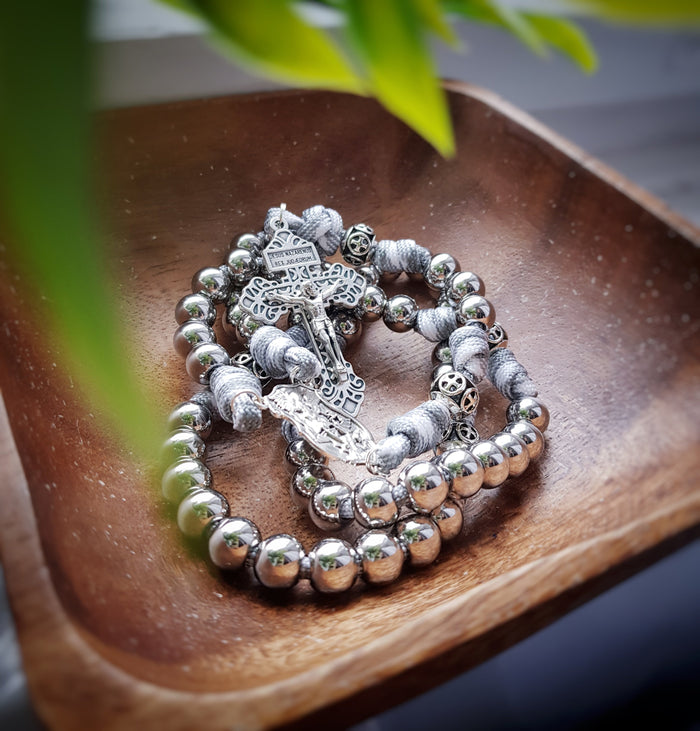
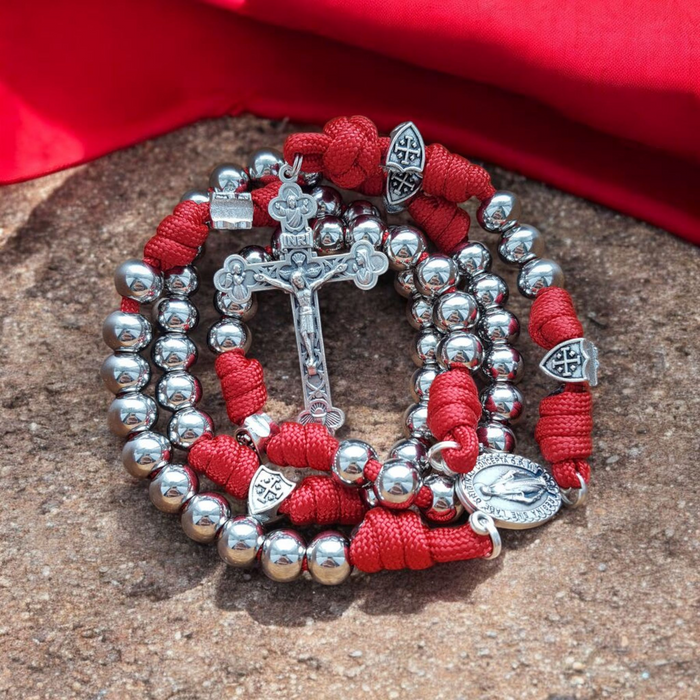
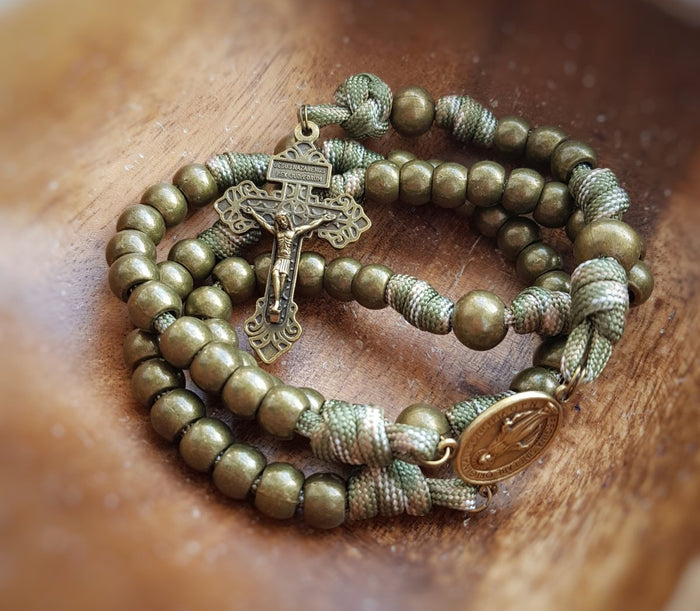
Since the Middle Ages—and particularly during the Baroque period— memento mori has been a popular motif in Christian art. Skulls, hourglasses, and wilting flowers remind the viewer of the brevity of earthly existence. This symbolism has lost none of its power to this day and is reflected in Marcellus’s handcrafted Memento Mori collection in the form of pendants, rings, and devotional objects that combine quality and attention to detail with deep symbolism.
The theological distinction is important: While *Vanitas* describes the transience of all earthly things in general, *Memento mori* focuses specifically on one’s own death and the resulting responsibility to shape one’s life in anticipation of eternity.
Memento mori in Monastic Life
Particularly in the Trappist tradition, “Memento mori” can still be read today as the order’s motto in the corridors of the monasteries, as the papal preacher Raniero Cantalamessa emphasized in an Advent reflection at the Vatican. In Carthusian monasteries, too, the quiet contemplation of one’s own mortality—supported, according to tradition, by a skull in the cell—has for centuries served as spiritual preparation for a godly end to one’s life.
Living "Memento mori" Today
Even outside the monastery and liturgical settings, the memento mori concept can shape everyday life: as a daily prayer, as silent contemplation before the cross, or as a visible sign on one’s own body—for example, in the form of a pendant from the Memento Mori collection. The fundamental Catholic attitude remains crucial here: the remembrance of death is not a cause for fear, but a sober invitation to consciously orient one’s life toward God.
Also available in the store:
Memento Mori devotional items —handcrafted objects of worship that serve as a reminder of one’s own mortality and the hope for eternal life.
Frequently Asked Questions
What does "Memento mori" mean in German?
Memento mori literally translates to “Remember that you will die” or, in essence, “Be aware of your mortality.” The expression comes from Latin and dates back to ancient Rome.
What is the difference between "Memento mori" and "Vanitas"?
Vanitas describes the transience of all earthly things in general, while memento mori refers specifically to one's own death and calls for conscious preparation for it.
Where does the phrase "Memento mori" come from?
According to tradition, during their triumphal processions, victorious Roman generals were told in a whisper by a slave that, despite their glory, they were mortal. In the Middle Ages, monasteries revived this idea as part of the Cluniac Reform.
Is "memento mori" a sad or morbid thought?
No. In the Catholic understanding, the awareness of death is not an expression of despair, but a sober invitation to live one’s life consciously and in anticipation of eternal life.
Let the centuries-old tradition of *memento mori* guide you as you discover handcrafted devotional items for your faith.
To the Memento Mori Collection →Remember to have your devotional items blessed by a priest before using them.